RESEARCH
CURRENT RESEARCH PROJECT (2026-2027)
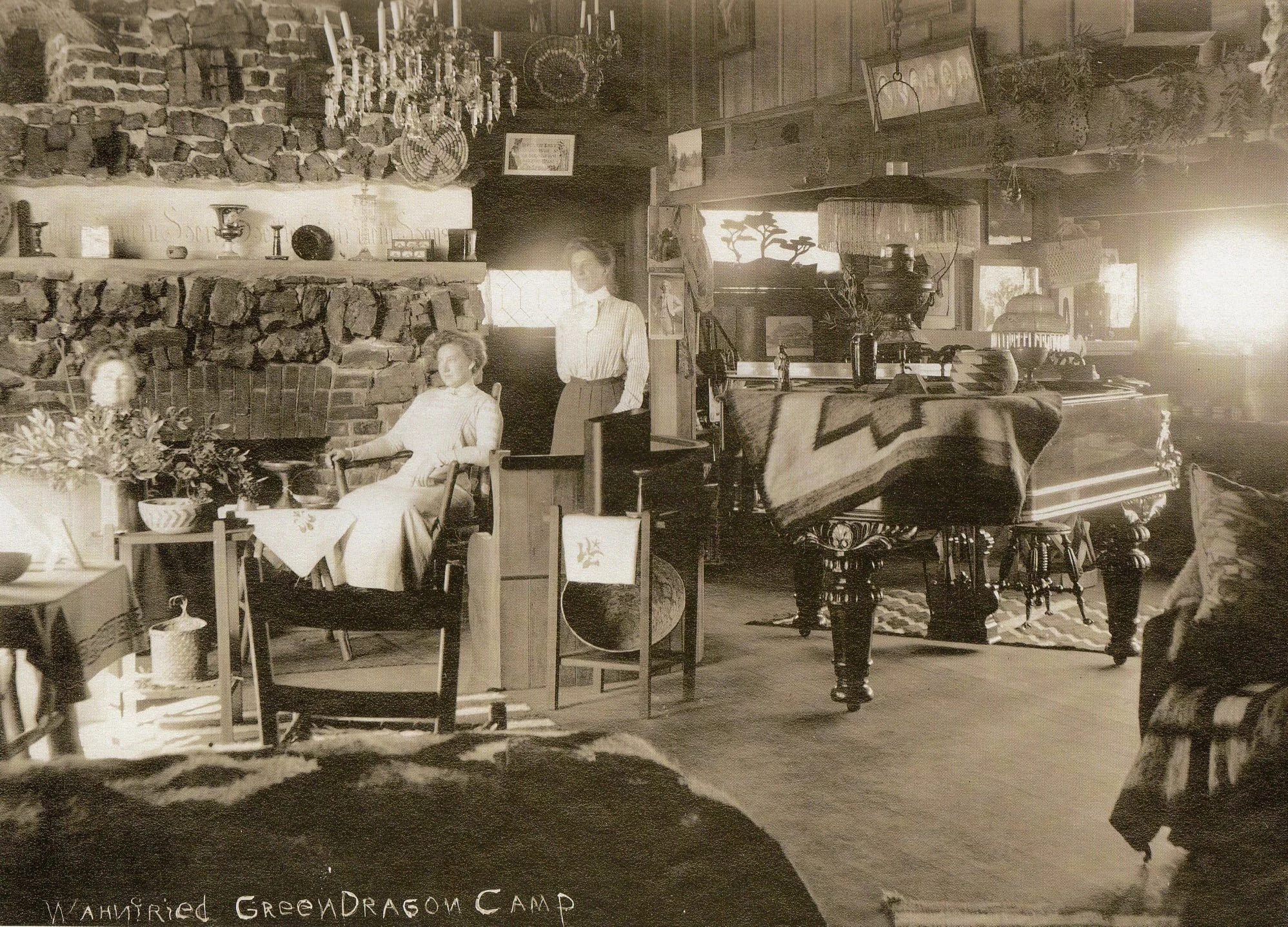
When Anna Held founded the Green Dragon Colony in 1894, she laid groundwork for La Jolla's future as a musically vibrant community. A pianist, chamber musician, and music teacher herself, she often held musical salons and concerts in her home, collaborating with traveling artists as well as local musicians. The San Francisco Chronicle wrote in 1901 that “La Jolla is the Green Dragon, and the Green Dragon is La Jolla;” the San Diego Sun wrote in 1911 that the Green Dragon camp was “pre-eminently a place to rest, to relax, and to create.” Before La Jolla had reliable running water, it boasted a Philharmonic Society, cantata performances, and live music events often offered several nights of the week. From these early efforts grew a thriving musical culture largely led by women, demonstrating female leadership in the community even before women had secured the right to vote. In a time before recorded music was commonplace, residents provided live performances for one another in an inclusive spirit that welcomed performers and audiences of all ages, as well as collaborations with musicians across the greater city of San Diego. Music flourished through grassroots initiatives, including musicales in private homes, community lectures on music history, a Girl Scout operetta, a baritone’s concert on the beach, the ambitious undertakings of the La Jolla Opera Company, the La Jolla “miniature opera,” and operetta and orchestra performances at La Jolla High School. With the support and enthusiasm of figures such as Ellen Browning Scripps, who remarked that hearing a symphony orchestra was “better than a year’s Sunday sermons,” sustained exuberance shaped a dynamic musical scene from the late nineteenth century onward.

San Diego’s Lost Art Songs
Katina is dedicated to reviving the work of Alice Barnett Stevenson, an early 20th-century composer who spent her life in San Diego. Katina worked with the original manuscripts in the San Diego History Center archives to bring this music to life for the first time this century in a lecture recital at Balboa Park’s San Diego History Center. She also shared her research at the Western History Association Conference in October 2023 on the panel "Gender and Music in California: Rediscovering Early Twentieth-Century Music Scenes from the Parlor to the Redwoods" and at the National Association of Teachers of Singing Vocal Symposium at San Diego State University. In 2025 she was featured on KPBS and also shared her research at the Society for American Music conference in Tacoma, as well as in a three-part lecture recital series at the Athenaeum.

Hildegard von bingen
Katina has edited and arranged Hildegard’s compositions for solo and multiple voices. The production of Ordo Virtutum that she directed was performed from an original edition, completed by Ned Tipton with Katina Mitchell’s consultation. Katina’s Hildegard arrangements have been performed at events from Monday Evening Concerts (Los Angeles) to the Berkeley Early Music Festival. Katina’s ongoing interest in Hildegard’s work extends to Hildegard’s greater body of work, and is not limited to her musical compositions. In 2025 she presented an hourlong lecture on Hildegard’s life and works for Palomar College’s Women’s History Conference, focusing primarily on the Ordo Virtutum and Katina’s musicological interpretations of the piece.

Luigi Rossi and the Roman Virtuosa
Katina’s doctoral work culminated in a document and lecture recital focusing on the ravishing lyric baroque music of 17th-century composer Luigi Rossi, including ten new editions of repertoire for multiple voices, and the discovery of a new piece not yet dealt with in scholarship. This project focused on women who exploited a burgeoning 17th-century class mobility through virtuosic musical achievements. The sources are 17th-century manuscripts found in Italy and England, and Katina’s research in Rome was funded by a grant from USC. Katina recently had the opportunity to reprise this lecture for music history students at the University of San Diego.